July 21, 2014

Summer Sights


Your Farm in Photos - Summer Sights

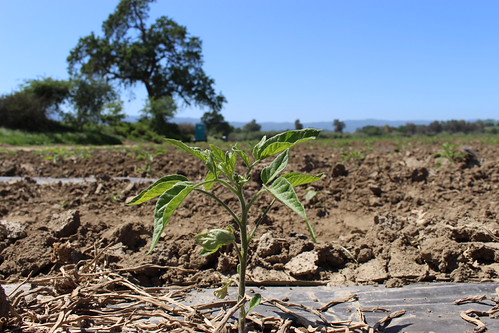
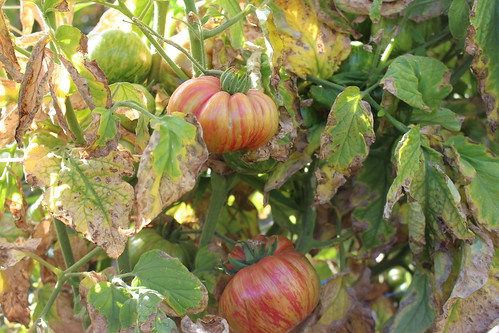
Our farm is operating at full speed. We are in the middle of the summer harvest. The tall tomato vines are still yielding precious little gems, but the plants are beginning to look old and tired.
Your Farm in Photos - Summer Sights

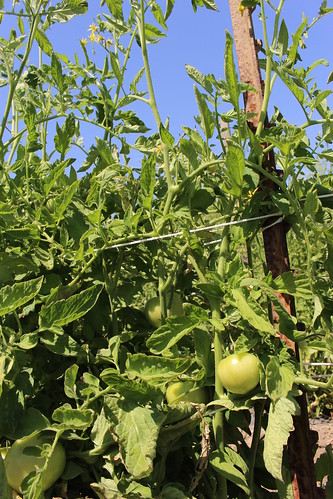
The tips of their vines are bright green with new growth, but closer to the ground, shades of yellow and brown can be seen. The tomatoes have grown all the way up the top of the five-foot stakes that were placed in the ground to guide them toward the sun.
Your Farm in Photos - Summer Sights

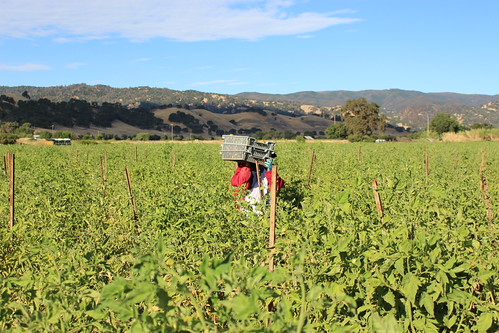
At the other end of the farm are second and third plantings that are just starting to be harvested. Beyond that is a fourth planting that we have not taken a tomato from yet. These plants are vibrant green with no sign of fading despite the heat.
Your Farm in Photos - Summer Sights

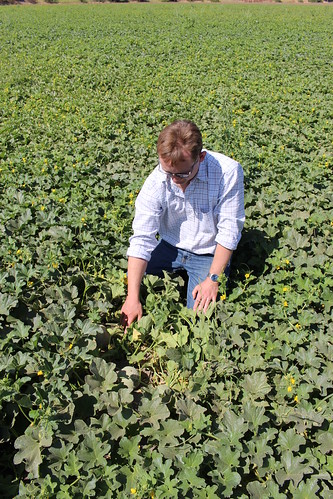
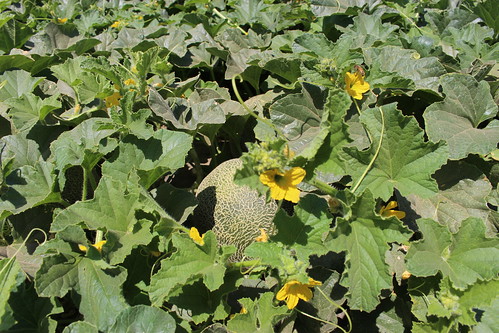
Next to the first tomato field sits our melons, which were first planted on the east end, which is where the harvest is happening now. The melon plants have grown to cover the entire field, leaving no view of the brown dirt, only the green of melon plant with the occasional shiny melon.
Your Farm in Photos - Summer Sights

Your Farm in Photos - Summer Sights


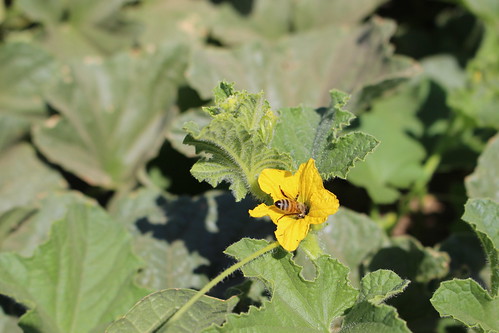
The melon plants on the west end of the field, which were the last to be planted, are a more vibrant green, and the sun highlights the new vines that are stretching up toward the sky, holding their little yellow melon flowers out for the bees to pollinate – soon those flowers will be weighted down with a quickly growing little melons.
Your Farm in Photos - Summer Sights

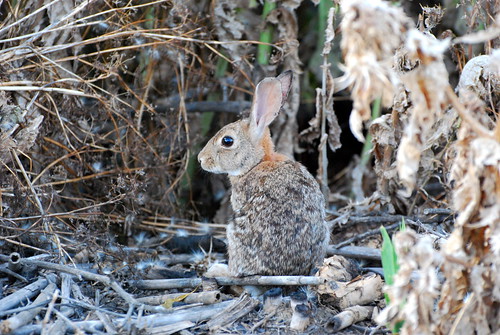
Beyond both of those fields is our creek, which is less of a creek and more of a series of puddles. In these puddles, moss is growing like crazy. Tracks of deer, raccoons, coyotes, birds, rabbits, squirrels and the occasional fresh water otter are easy to find.

Your Farm in Photos - Summer Sights

Some of the holes are big enough and replenished quickly enough that we are able to irrigate from these natural springs, but the majority of our farm’s irrigation water is being pumped from a precious groundwater resource. In the absence of this groundwater, our farm would be dry and dead.
Your Farm in Photos - Summer Sights

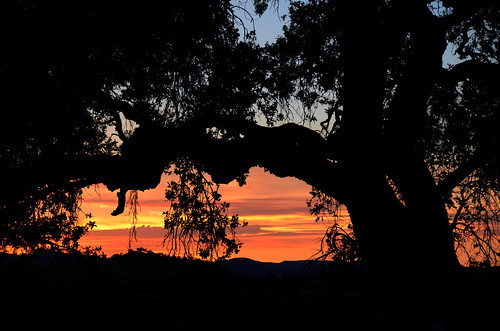
Farm evenings are amazing this time of year. The fields back up to the creek mark the line from which the golden hills rise in small mounds toward the sky. The sky has been filled with unique summer clouds that offer a texture much more rich that a clear sky.

Your Farm in Photos - Summer Sights

In the final hour of the day, the smoke in the atmosphere from wild fires is coupled with the amber glow of our sun’s golden hour. Combined with the farm’s fields, hills and clouds, the farm atmosphere puts on a show that might compete with the World Cup.

June 2, 2014

The Water Pinch

Your Farm in Photos - The Water Pinch
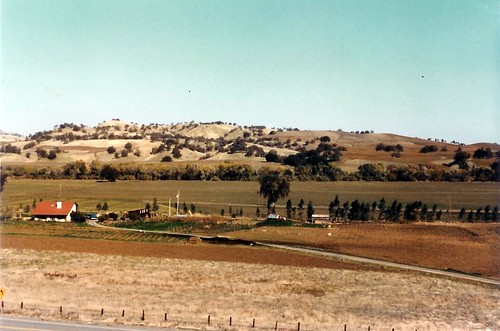
The farm in 1976

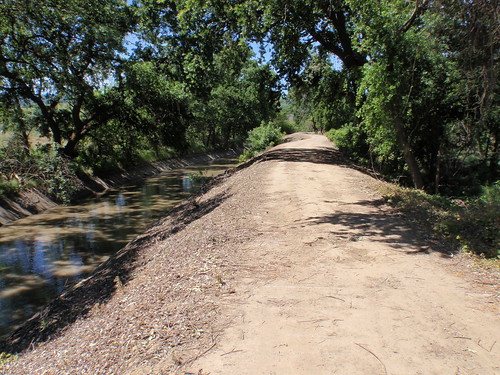
The year that keeps coming up in the farming world about the water situation is 1976. For our farm, the last time the canal didn’t open up was in 1976. The one tangible piece of data that could be used to make a prediction about how much water will be in the creek and how long wells will hold out for is what happened in 1976. I was not yet born in 1976, and the piece of farm land that my parents were farming (ironically, 1976 was the year our farm was founded) was small and fed entirely by a small ground water well that had enough water to get us through the year.

Your Farm in Photos - The Water Pinch
Cache Creek on the farm.

For my kids, I started a “Water Log” in my journal for this year.  In it, I am keeping track of the details. The most significant detail this year is that the canal was able to take care of our water needs until May 15th after which point it went dry. Cache Creek is currently holding out for us, but the neighbor across the way who is farming 220 acres of olives and is completely dependent upon canal water moved his pumps into Cache Creek last week. It is hard for me to picture the creek having enough water for both of us through the entire summer.

Your Farm in Photos - The Water Pinch
Irrigation pipes

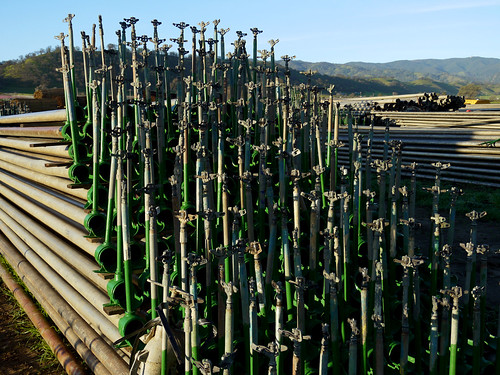
The farm has a set of ground water wells that we have historically not had to use. The other issue is that the wells are not in the best of locations, some of them are sitting in the middle of fields that we have elected to fallow due to the water shortage (we reduced our farmed acreage by 70 acres this year). The challenge is that it’s a lot of pipe needed to move the water from the various wells to all of the fields that need the water.


Your Farm in Photos - The Water Pinch
Water pump
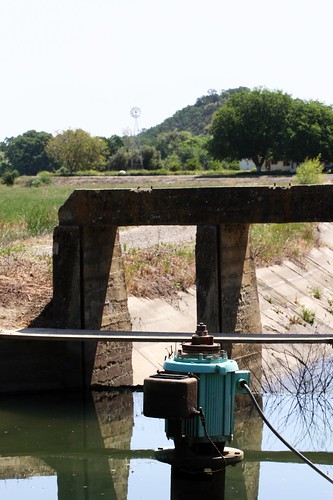
The good news is that we have options. We sit on top of a healthy aquifer of water that got most farmers through 1976 and will do the same for our farm today — all we have to do it access the water. I sat down and made a water budget for the summer, looking at the crops we have committed to, historical weather patterns and added it all up. In the month of July, our farm will need about 15.7 acre-feet of water per week. If we ran our pumps six days per week, 12 hours per day, they would need to generate 1,187 gallons of water per minute. If we ran the pumps seven days per week, 18 hours per day, we would need 678 gallons per minute. Without the creek, I have a total of 525 gallons per minute of water in my wells.

Your Farm in Photos - The Water Pinch
Drilling a new well.

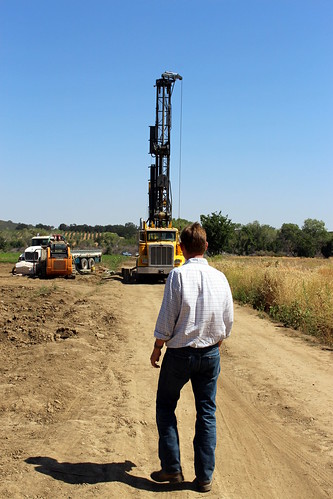
So, time to drill some new wells. On average, wells on our farm yield 100-200 gallons per minute (wells are about 250 feet deep). I need to develop another 300 gallons per minute, and I need to get that water from one end of the farm to the other. We just finished installing large, buried pipe and as you read this, I have three new wells being drilled. Well drillers are so busy that most of them will tell you they are booked out until December — we have been lucky to get this guy out. Cross your fingers for 300 gpm!

May 20, 2014

Cover Crops!


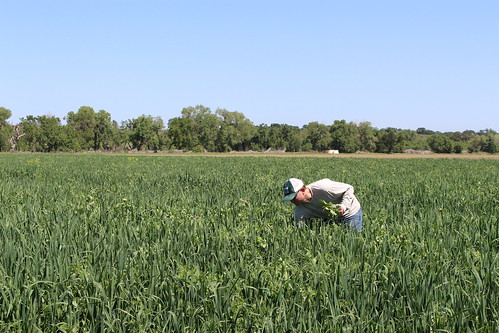
Thad Picking Cover Crops
Field of Cover Crops 2014
If you just take crops from the ground, year after year, it will not take long until the ground stops giving you good crops. Someone once told me that good farmers feed the soil and let the soil feed the crops.  As soon as you are feeding crops directly, you have a problem. I have found that to be true. Planting crops into soil that has the resources it needs to care for the crops is the best way to farm.

Cover Crops

 Field of Cover Crops 2011

This may sound simple, but it can be complicated to understand and even more difficult to implement. When farming organically, there are some organic fertilizers that you can apply like feather meal, composts and seaweed extracts. These items are primarily used to add nitrogen to the soil that plants can use. They work okay, but are expensive and often have negative side effects that reduce the quality of a soil (salts in feather meal, non-compostable trash like broken glass in compost).


Cover Crops 1

These tools have their place when you are trying to give a little extra bump to a crop, but they are not tools that can be relied upon to care for soil and plants. The only way I have found to take long term care of soils is to grow cover crops, as often as possible. On our farm, we make a point to budget the expenses to grow one cover crop with each crop.

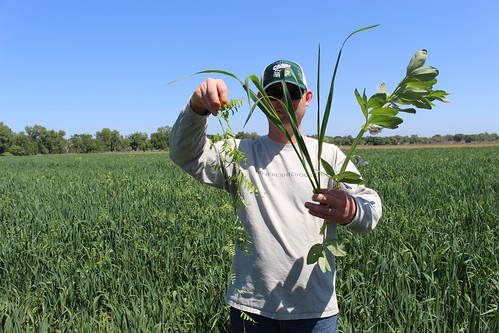
Thad Sharing Cover Crops

Thad Shows Off Our Cover Crop Mix of Grasses and Legumes

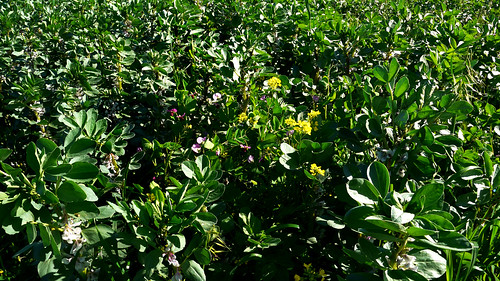
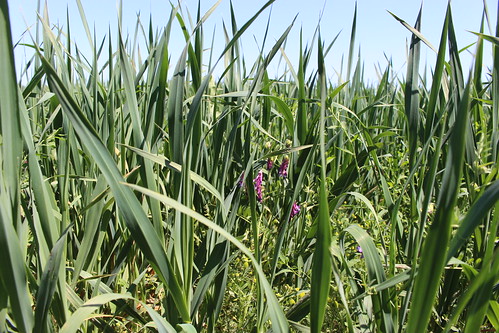
Cover crops are typically mixes of grasses and legumes. The exact mix depends on your location and the time of year. Right now our farm is using a mix of 80% Iron and Clay Peas and 20% Buckwheat. This is a mix that grows well in the summer heat. The peas have some nitrogen-fixing roots that take nitrogen gas out of the air and turn it into mineralized nitrogen that will decompose over time and turn into nitrates and nitrites that future crops will eat up.

Tomato Seedling

A Tomato Seedling Benefits from Last Season's Cover Crop

The green matter from both peas and the wheat will add valuable organic matter to our soil (we try to keep the organic matter level of our soils over 1%, which is easier said than done). This provides amazing benefits to the soil structure, enabling roots and water to easily travel through it. It also provides food for soil microbes to eat, digest and secrete valuable food for our plants.

All of these benefits are obtained by nothing but the local resources of land, water and seeds — they are without a doubt the most sustainable way to maintain healthy soil. Cover crops should be the cornerstone of every farm’s fertilization program. Unfortunately, they are not — but they are the cornerstone of your farm’s fertilization program!